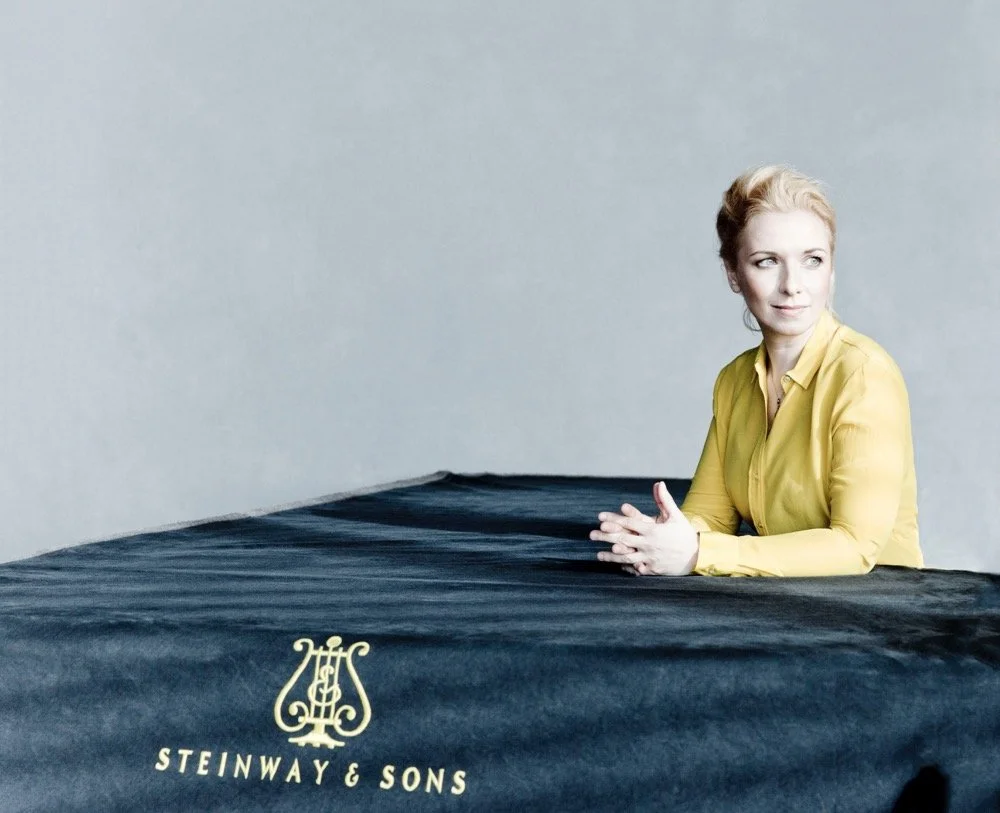
How can Tamara Stefanovich’s Portland visit be only two more newsletters away? Getting to delve deeper into her program over the last few weeks, we think her departure from the predominantly Romantic repertory we’ve been hearing in the past few recitals is as refreshing as the crisp, sunny days we’re been experiencing here in Portland.
Sonata-allegro form, as I mentioned in last week’s message, is the thread running steadily through Stefanovich’s February 8th program. Alas, a handful of newsletters is hardly enough to cover a topic that can arguably be called the most critical structural model of western classical music. My friend Google AI is quick to point out that scholarly databases like Doctoral Dissertations in Musicology (DDM) contain over 16,000 records of dissertations on this topic – and these are only the dissertations available in English. (One hopes that at least half of them reveal how good old sonata-allegro from makes for listening delight.)
YouTube, of course, has true educational gems for those of us keen to learn, but short on time. Leonard Bernstein’s classic and quintessential Young People’s Concert from 1964, dedicated to the question “What is sonata form?” is still an excellent primer and well worth watching. A lot sillier but nonetheless screen-time well spent, is British classical music enthusiast Vincent Sheehan’s 8-minute video, explaining the form using cookies, or biscuits, as the English (and Bluey) call them.

Understanding the importance of this form doesn’t get us to joyful listening, though. And to get there, I think, the key is hiding in plain sight: the term “sonata” itself. Derived from the Italian word “sonare”, to sound or to play (an instrument), the term was first coined to refer to any piece of instrumental music, as opposed to music that was sung (“cantare”, to sing, gave us “cantata”, which is a piece of vocal music). Add “allegro”, which, as Bill likes to remind us, is Italian for “cheerful”, and we have Sonata-allegro literally meaning “cheerful instrumental sound”!
When Bach wrote his first keyboard sonatas, modeled on and inspired by the work of predecessors such as Vivaldi, Couperin, and Reincken, he didn’t yet have the ABA-(suspension bridge, pop song, biscuit – see the video references above) model in mind. He was simply deeply fascinated by exploring the possibilities and limitations of the keyboard at his disposal. And importantly, and as I implied in last week’s newsletter, he wasn’t taking dictation from the heavens either. By studying, copying and transcribing his predecessors’ work, he was working meticulously on unlocking patterns and forms from the basic source material, amplifying and stretching and recreating by casting them in the familiar forms available to him: baroque dances like the gigue, the allemande and the sarabande. It is this concept of thematic development that laid the groundwork for what would, by the next generation, become “classical allegro-sonata form” – and that brought the contrapuntal harmonies and voice-leading techniques from the world of singing to the world of keyboard playing.
Listen to this beautiful piece of Bach, modeled Johann Adam Reincken’s “Hortus Musicus” (“musical garden”). Now tell us you don’t feel at least somewhat better about a world with piano music in it? And tell us you don’t want to see this played live?