It’s sonata time: Your temporal haven is waiting at Lincoln Hall!
I catch myself often, when writing to you, dear friends of PPI, referencing time and it’s relentless passing: It’s that season again, how can it possibly be time to celebrate this or that, how to communicate so many thoughts in so little time! This is why I was stopped dead in my tracks earlier today, when, in an equisite essay by author/philosopher, Maria Popova, I suddenly connected the dots between acute perception of time, and a deep appreciation for music. Popova writes: “All great storytelling has the shape of music. All music is a shelter in time. In these lives hounded by restlessness, trembling with urgency, we need this shelter, need a place still enough and quiet enough to hear the story of our becoming, the song of life evolution encoded in our cells: Life is exquisitely a time-thing, like music.”
Life is a time-thing, like music. A simple thought, and yet profoundly useful in thinking about a recital, it’s shape and it’s story. When we’re sitting quietly in Lincoln Hall, we are all experiencing something that moves us forward in real time but simultaneously takes us back in history and connects us to different eras, different personalities, different social practices and expectations. Add the additional layer of sonata form as underlying structure, and we immerse ourselves in a unique temporal dimension that feels as safe as a baby blanket, yet as exciting and diverse as the cosmos itself.
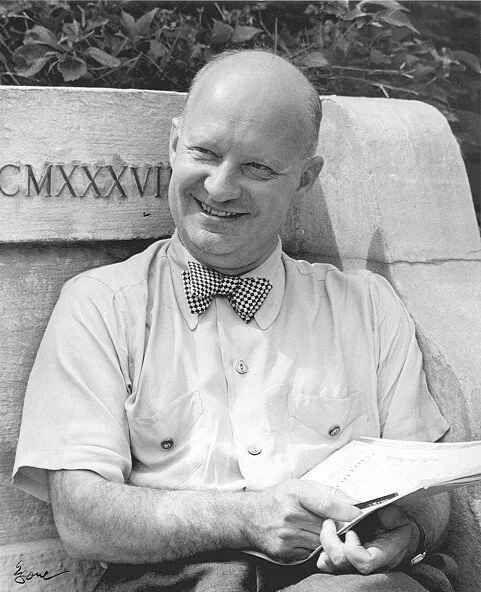
Paul Hindemith
Creative Commons Number: CC BY-SA 3.0
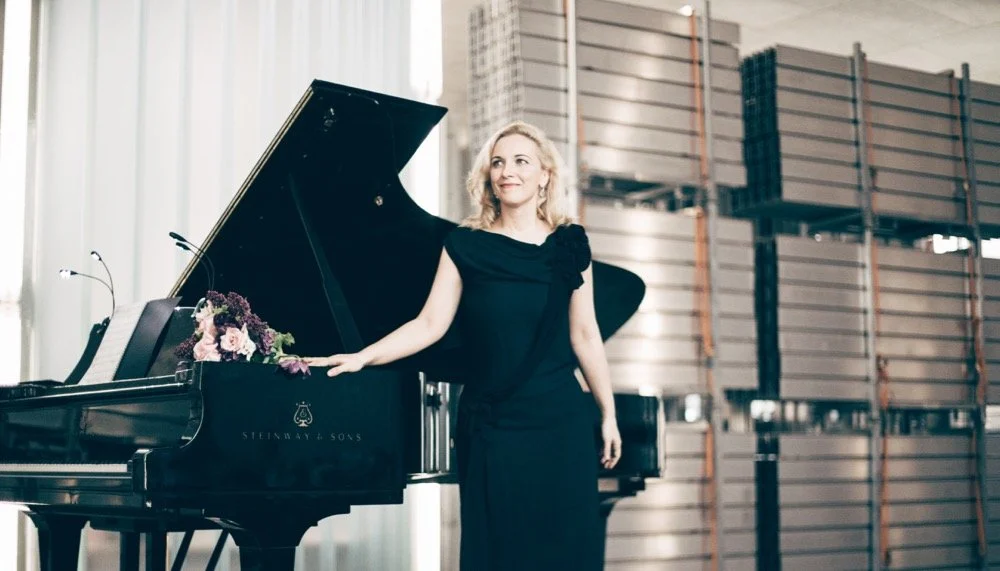
What Tamara Stefanovich with her electric spirit and effervescent playing will bring to us on Sunday, is a snapshot not only of pianistic development, but of the human spirit and it’s desire to mold our relationship with time. Isn’t it interesting, then, to look at the tempo indications for the movements of the Hindemith piano sonata (the last piece on Stefanovich’s program, here played by Maria Yudina), and not only hear, but also see in them the urgency, turbulence and intricacies of Hindemith’s life edging in?
I. Ruhig bewegt (Calmly animated)
II. Sehr Lebhaft (Very lively)
III. Mäßig schnell (Moderately fast)
IV. Fuge: Lebhaft (Fugue: Lively)
Written in 1936, just before he was forced to leave Germany for good, Sonata No. 3 stems from a pivotal and turbulent year in Hindemith’s life, marked by intense political pressure from the Nazi regime, which was actively banning his work. And yet, this is the same Hindemith who never gave up on the idea that music could be a practical and useful tool in calling for world peace: “It is not impossible,” he wrote, “that out of a tremendous movement of amateur community music, a peace movement could spread over the world. People who make music together cannot be enemies, at least not while the music lasts.”
As piercingly poignant today as ninety years ago. And bringing me right back to where I began: That while we’re actively busy with music (making it, composing it, or listening to it) we are spending our time wisely, and (hopefully) improving the state of the world, one piano recital at a time.