
Is there a truer testament of being exuberantly alive than the urge to express a feeling through movement? (And, anthropomorphic as it is, is there any scene in recent animation history that captures this urge so vivaciously?) Old or young, coordinated or clumsy – we’re simply wired to “move it, move it” – whether we’re actually sweeping across a dance floor, peddling our stationary bikes to a beat, or just tapping a rhythm on our laps when hearing fabulous music!
Jan Lisiecki’s riveting recital program for Sunday, 8 November is guaranteed to make even the most uncoordinated of us dancers in our minds with a selection of pieces that act as a brilliant conversation between primitive folk roots and high-salon classical reinventions. Some of these works are well-known showstoppers (Piazzolla’s Libertango! De Falla’s Ritual Fire Dance!); others are quite a rarity to hear on a concert stage (it’s possible that you’ve listened to classical music all your life but never heard the name Bohuslav Martinů before). Add in some Schumann, Schubert, Brahms and Bartok and you’re in for an afternoon that will forever change how you think about dancing: both the act itself, and the cultural meaning of specific dance forms.
Here’s what makes a program like this so deliciously contradictory: Only two of these pieces were specifically composed to be danced to (Piazzolla and De Falla, again.) Every other piece, from Brahms’s beloved Waltz in A-flat Major to Chopin’s Polonaise in the same key, were inspired by dancing – and then distilled into instrumental form. We can argue that, in this sense, the human impulse for moving is the original architect of rhythm. Long before people dreamed of concert halls or knew how to write melodies down on paper, rhythms moved through their bodies. By capturing these distinctly regional cadences and pulses for presenting on a concert stage, a composer’s representation of the Czech Dupák (“Stomp Dance”), the Romanian Mărunțel (“Fast Dance”) or Argentinian Malambo (a complex term that could mean both “a horse’s gallop” or “sorrow”) becomes not just a provocative time-capsule of culture, but also a dramatic shorthand for tapping into a universal human vocabulary.
Please don’t get lost in YouTube before you secure one of the (limited) remaining tickets to this coming weekend’s recital!
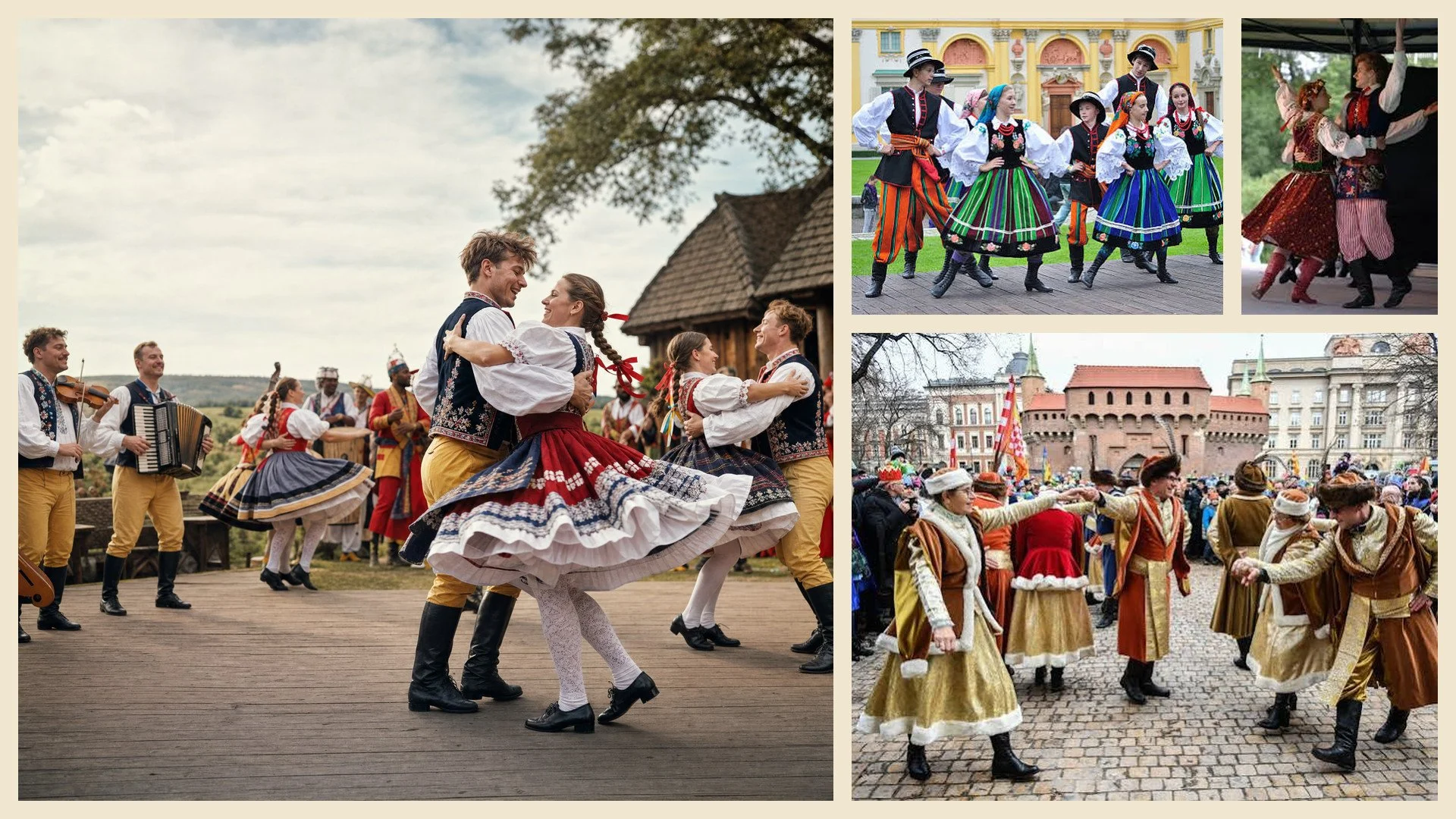
Then, click here to watch some Czech dancing, here for some Romanian dances (with stunning costumes!), here for a fabulously percussive Argentinian Malambo and here for a stately Polonaise (the national dance of Poland)!
(As always, our sincerest gratitude to our loyal subscribers and single ticket buyers! You truly make us dance with joy!)