

(Yes, we are still celebrating that Eric Lu won the Chopin Competition and looking forward to his sold-out performance for PPI on November 16th!)
If there’s one thing about human culture that I find absolutely fascinating, it’s our paradoxical relationship with competition. On the one hand, we cannot overstress the importance of everyone being a winner (there’s no “I” in “team”!) on the other, our quest for individual excellence and relentless one-upping has never been more pronounced. Whether in business, technology, sports or even innocent hobbies (competitive knitting, anyone?), we’ve thoroughly ingrained the belief that striving for individual greatness is what ultimately proves our human worth.
This strange tension, the need for both competition and cooperation to drive growth and innovation, has its own term in business lingo, “coopetition”, and, to me, has no clearer application than the heady world of piano competitions. Yes, these are extremely elite events where superhuman levels of technical excellence and machine-like mental strength are demanded from players who completely isolate themselves for hours on end, honing individual skills that won’t stop wars, end hunger or cure cancer.
Ultimately, though, these extraordinarily gifted individuals’ channeling of timeless music and their extraordinary talent for making the personal public become a gift to us all. It is each individual musician’s commitment to an often lonely pursuit that gives humanity hope during wars and a reason for living, despite horrors like hunger or cancer. Who doesn’t want to believe in a better future (or, at least, a bearable present!) when listening to Chopin’s Concerto in F Minor, op. 21? (Scroll to 17:39 into the video to hear Eric Lu’s equisite Chopin Competition rendition again, if you haven’t had it on repeat over the last week already.)
Indeed, watching the final rounds of the 19th Chopin Competition in Warsaw last week (thanks to YouTube from the comfort of my couch, and thanks to the flickering scroll of comments in the side-panel and steadily WhatsApping back and forth with friends on other continents, feeling oddly connected and collaborative!), I was struck not only by the competitive intensity, but also by the incredible warmth, shared elation and spirit of cameraderie and emotional involvement that an event like this engenders in contestants and global audience alike.
Yes, it’s true that the competition in Warsaw this year seemed so fierce that it almost felt cruel, but as the conviviality and interconnectedness of the competition unfolded – daily newspapers celebrating all things Chopin; interviews with participants and past winners; collaborative projects involving museum curators, film makers, and visual artists – the Chopin Competition was once again about infintely more than phenomenal pianists outperforming each other.
Maybe precisely because the same cascading Ballades and Préludes, Mazurkas and Nocturnes are heard over and over again (this is one of the few piano competitions dedicated to the works of a single composer; players are required to perform a selection from a set list of Chopin compositions), it becomes endlessly fascinating to find nuance and personality shimmering through the same repertory, and hearing how everything from the choice of piano (competitors in the final stage could choose among a Steinway, Fazioli, C. Bechstein, Yamaha or Shigeru Kawai), the depth of a player’s touch, the idiosyncracies inherent in dynamic markings and slight differences in tempo can all completely change a performance. Yes, there are “i’s” in “competition”, but while celebrating individual greatness, an event like the Chopin vividly and viscerally highlights how gloriously unifying great music can be.
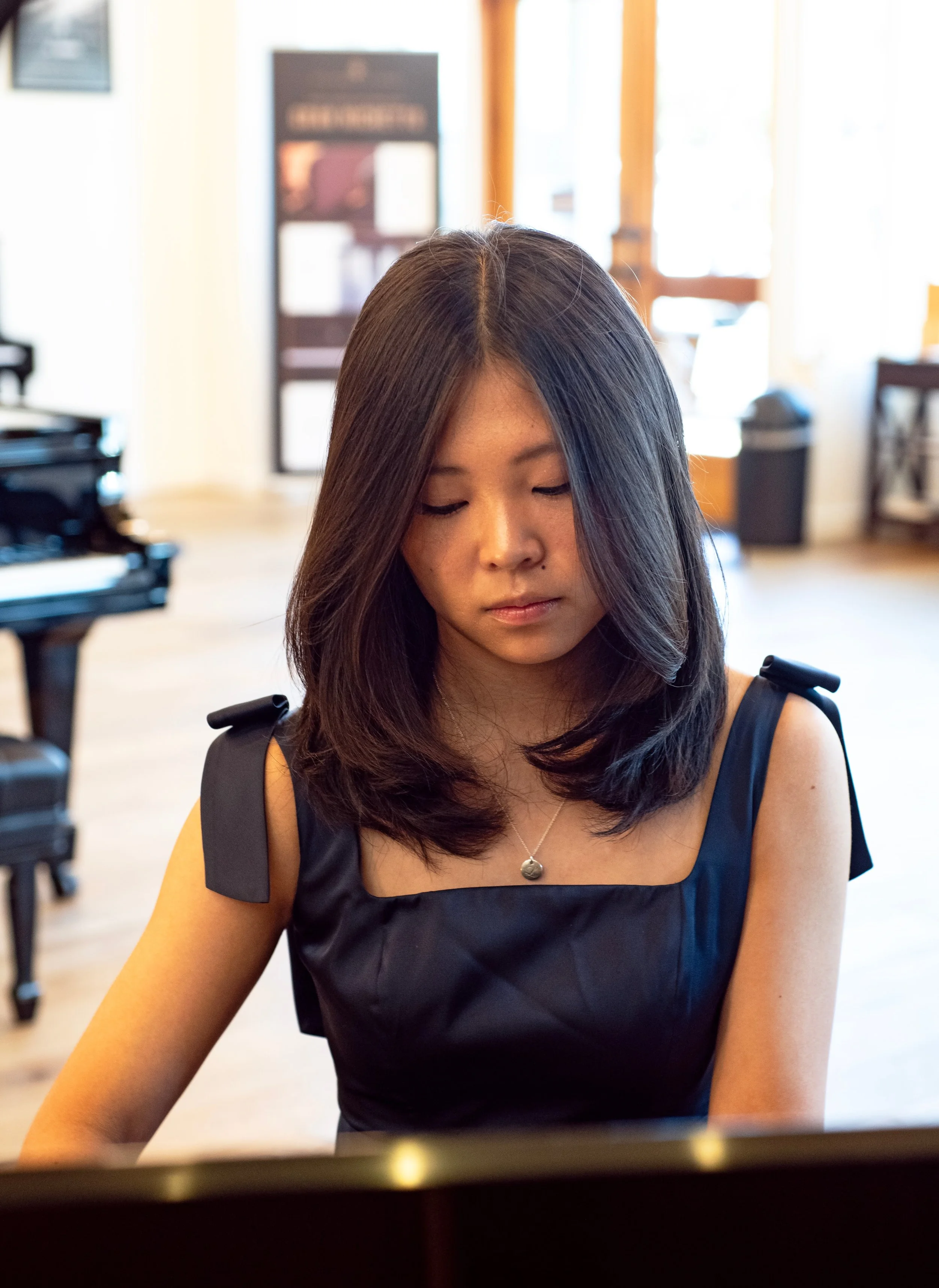
It is for this exact reason, celebrating great talent while building community, that PPI is so incredibly proud of our partnership with Portland Youth Philharmonic, with whom we’ve been presenting a biennial concerto competition since 2018. As part of their prize, the winner gets to perform a full-length concerto with the PYP – a huge step in a young pianist’s career and a wonderful opportunity for a youth orchestra to practice the fine art of playing with a soloist. The winner of our 2025 competition, fifteen-year-old Lucy Joo, will be playing with the PYP on November 8th in a program they title “Rising Winds”. Come hear this inspired young pianist perform Beethoven’s “Emperor” Concerto at the Arlene Schitzer Concert Hall and boost your confidence in the next generation of dedicated musicians! You can find tickets here.