
Portland Piano International Presents Tamara Stefanovich in Recital, February 8
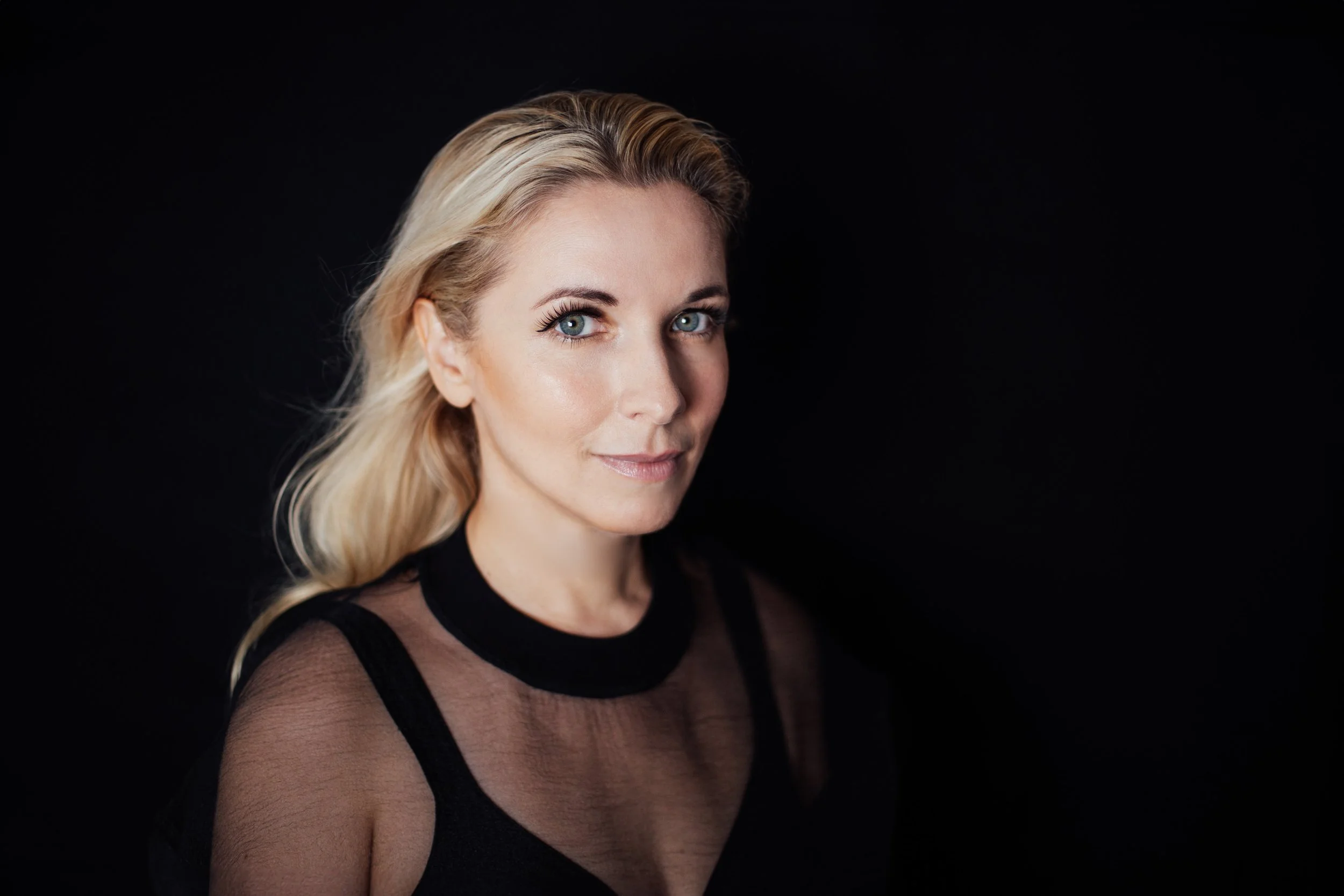
Discover how the same musical blueprint can house wildly different visions—a journey across three centuries that changes how you hear both old and new music.
Sunday, February 8, 2026 • 4:00 PM
PSU's Lincoln Performance Hall
Portland, OR — Metaphors for sonata form abound, but very few of these (a hero’s journey, a debate, a three-tiered cake) make this classical structure as relevant and as accessible as Tamara Stefanovich’s relating it to a paper doll: One unchanging silhouette wearing radically different costumes across baroque, classical, and modern eras. When Stefanovich returns to Portland Piano International on February 8, prepare to be plunged into a realm of sound spanning the gamut of musical invention and pianistic development. First come father J.S. Bach and son C.P.E. Bach establishing the blueprint, then three jewel-like Scarlatti sonatas compressing entire worlds into minutes, and Antonio Soler's Spanish melancholy concentrated to almost unbearable density. Then watch as Bartók explodes that same form from within—percussive, folk-inflected, straining against its container yet somehow more focused because of it—before Hindemith proves that 20th-century invention and neoclassical discipline can coexist in perfect balance. By the end of this recital, expect to be deeply nourished musically, and to have a completely new understanding of how the same structure can underpin vastly diverse soundscapes.
When Stefanovich curated "The Clearing" at PPI in 2016, audiences experienced something revelatory: old and new music in dialogue rather than opposition. That approach launched her into ambitious marathons—50 études in a single program, 20 sonatas in one evening—that The Guardian called "a remarkable feat." Now she brings that vision back in concentrated form.
Here's what makes Stefanovich’s approach so radical: Instead of simply presenting standard repertory played masterfully, she offers audiences a glimpse into the mechanics of form. Taking her audience on a journey from the baroque to the twentieth century, she makes an audible lens for how constraints can liberate rather than confine, how the same rules can produce infinite variety.
The first half gives listeners the blueprint. J.S. Bach's Sonata nach Reincken in A Minor, BWV 965, shows a young composer learning form by inhabiting another composer's architecture. Three Domenico Scarlatti sonatas (K. 158 in C Minor, K. 13 in G Major, K. 406 in C Major) compress entire universes of wit and surprise into a few minutes each, proving just how much expression can fit into a tiny two-part structure. Carl Philipp Emanuel Bach's Sonata in G Minor, Wq. 65/17, H. 467, conveys the exact moment when baroque rigor meets a new kind of expressive freedom. Antonio Soler's Sonata in D-flat Major, SR. 110 (Largo Cantabile), closes the half with Spanish melancholy concentrated to almost unbearable density – communicating how formal constraint can intensify emotion rather than dilute it.
After intermission, we’re firmly in the 20th century, when the sonata form seemingly explodes. Béla Bartók's Sonata for Piano, BB 88, Sz. 80 (1926) takes classical proportions and fills it with percussive attacks, folk rhythms, and harmonies that seem to fight against their formal container. Contrary to our expectations, though, this tension becomes the point: The old rules don't cage Bartók's wildness—they focus it into something even more powerful. Ultimately, Paul Hindemith's Sonata No. 3 in B-flat Major (offering less explosion and more architecture) proves to contemporary audiences that modernist invention and neoclassical discipline can coexist in the same four movements.
Hearing Tamara Stefanovich live in recital is an opportunity to hear structure in a revolutionary way. By revealing the formal skeletons underneath surface beauty, she puts in motion a conversation across centuries, emphasizing her belief that "without discovering the art of our time, we are not artists." Once it becomes clear how form adapts and survives across centuries, it is plain to see that innovation isn't about destroying tradition. It's about making tradition speak in new dialects.
Stefanovich brings unique authority to the PPI stage. Her Grammy-nominated recording of Bartók's Concerto for two pianos with Pierre-Laurent Aimard and the London Symphony Orchestra under Pierre Boulez proves she understands what Bartók demands from performers. Her Edison Award-winning recording of Kurtág's Quasi una Fantasia demonstrates her command of contemporary repertoire. She regularly performs with The Cleveland Orchestra, Chicago Symphony Orchestra, London Symphony Orchestra, and Chamber Orchestra of Europe at venues including Wigmore Hall, Philharmonie Berlin, and Elbphilharmonie Hamburg. She's the pianist who can guide you through this journey because she's spent years asking the questions that matter: "What is my role as an instrumentalist in the 21st century? What does it mean to make old music speak to our current-day being in the world?"
This isn't background music for your Sunday afternoon. This is an afternoon that changes how you hear music—period.
Tamara Stefanovich, Program
JOHANN SEBASTIAN BACH
Sonata nach Reincken in A Minor, BWV 965
DOMENICO SCARLATTI
Sonata in C Minor, K. 158
Sonata in G Major, K. 13
Sonata in C Major, K. 406
CARL PHILIPP EMANUEL BACH
Sonata in G Minor, Wq. 65/17, H. 467
BÉLA BARTÓK
Sonata for Piano, BB 88, Sz. 80
ANTONIO SOLER
Sonata in D-flat Major, SR. 110 (Largo Cantabile)
PAUL HINDEMITH
Sonata No. 3 in B-flat Major
Tickets & Information: https://www.portlandpiano.org/tamara-stefanovich
Venue: Lincoln Performance Hall, Portland State University, Portland, OR
Date/Time: Sunday, January 4, 2026 • 4:00 PM
###
MEDIA CONTACT: Jonathan Eifert, 347.741.1913
jonathan.eifert@goldsoundmedia.com
HIGH-RES PHOTOS [DOWNLOAD]
PORTLAND PIANO INTERNATIONAL has presented more than 220 artists in recital and through outreach activities. Some of the greatest pianists in the world of music have played for Portland audiences because of this organization. While pianists have many opportunities to play the concerto repertoire, this is one of only a handful of recital series that remains devoted to the solo piano recital. Portland Piano International is a vital part of Portland's quality cultural life and it has consistently garnered praise from both the local and national media, heralded a "consistently brilliant Piano Recital Series" (Willamette Week) and "one of this city's musical treasures" (The Oregonian).