
Filippo Gorini: Notes on the Program
“The necessary long breath”
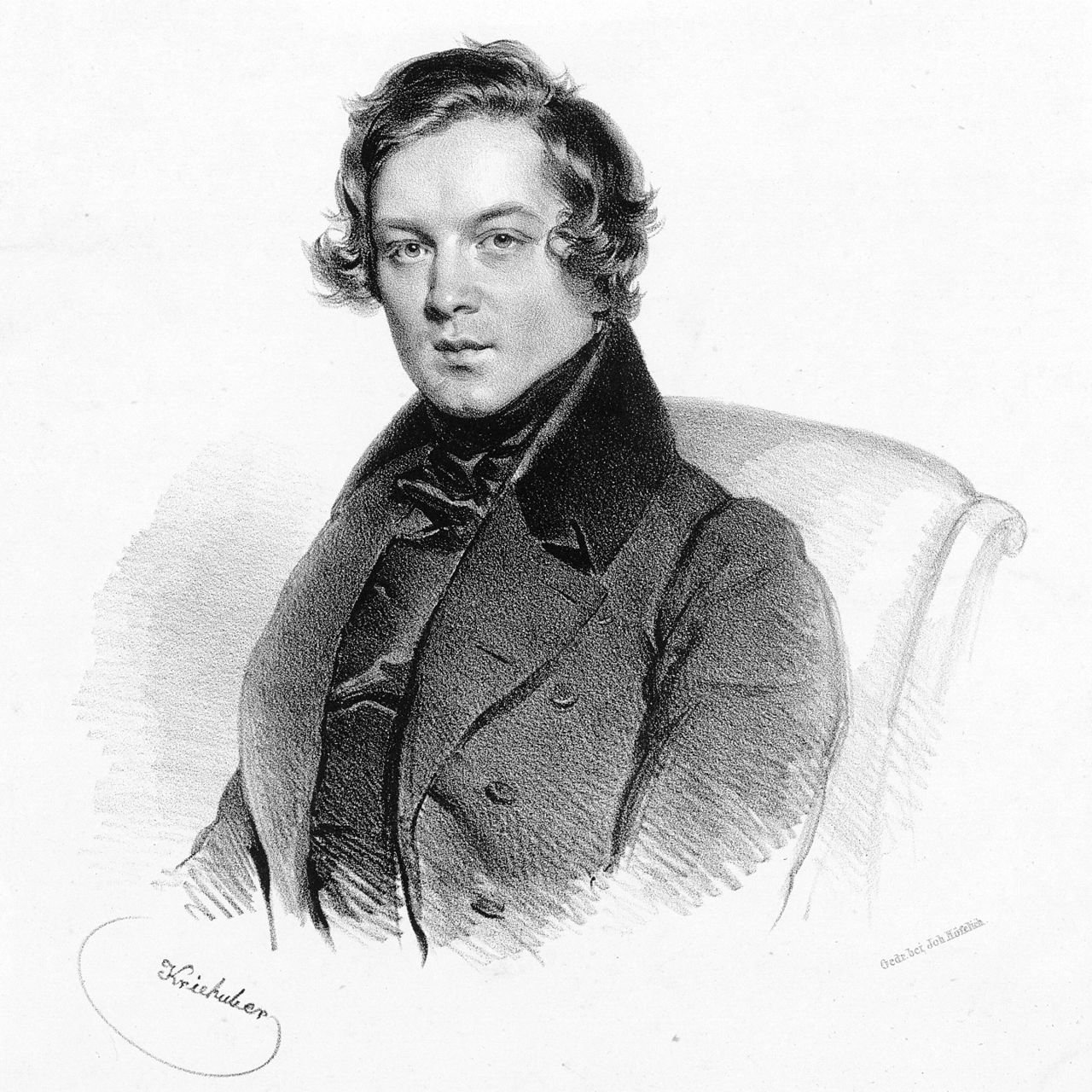
ROBERT SCHUMANN
Arabeske, op. 18
With a first half entirely dedicated to Schumann, Filippo’s choice for this dreamy, wistful and tender piece couldn’t be more perfect. Not only does is allow us a smooth, gentle entry into Schumann’s intricate emotional realm, it also establishes the spiritual baseline from which we’ll journey into the Davidsbündlertänze. (Not to milk the metaphors ad nauseam, but this really is like “dynamic stretching” for our ears, before running a marathon!)
The Arabeske was written in 1839 (after the Davidsbundlertänze!), spurred by both financial necessity and a need for emotional expression. Living in Vienna, indefinitely separated from his fiancée, Clara Wieck, Schumann is writing in a condensed, accessible style (Hausmusik, music to be performed at home, was a lucrative potential source of income at the time), the composer alternates lyrical themes of yearning with more resolute, impassioned outbursts. It’s a delicate balance of fragile beauty and a condensed version of everything Schumann encapsulates: brooding and playfulness, laughter and longing.
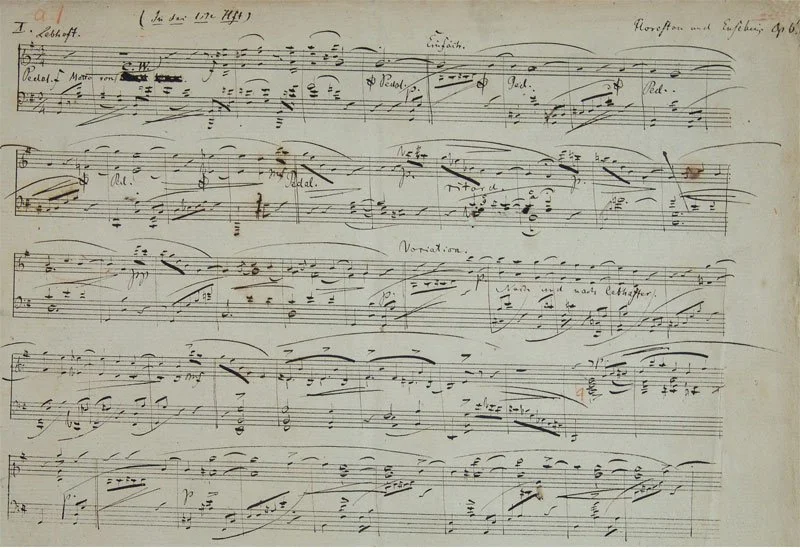
Davidsbündlertänze, op. 6
“I have just turned out eighteen Davidsbündlertänze in the midst of my storm-tossed life.” (Robert Schumann in a letter to his publisher, September 21, 1837)
Pointing out that the “Dances of the league of David” (as one would loosely translate the title of this collection of 18 piano character pieces) all have an intrinsically mobile quality would probably sound akin to the warnings on Starbucks cups that coffee is hot. What is a dance other than a series of rhythmic movements, and why call a composition a “dance” if not for that reason? What’s always interesting about instrumental dances, though, is that they are not explicitly meant to be danced to (unless, to complicate matters, the music gets choreographed … as George Balanchine did for the Davidsbündlertänze, back in 1980). Having said that, a title is often our first listening-tool, as it supposedly provides us with at least some sense of a composer’s artistic vision and intent.
With Schumann and his “storm-tossed life” (as quoted above), things are rarely that simple. Should I mention that in his second edition of the work (it was composed in 1837, published in 1838, then completely revised in 1850) he removed the “dance”-part altogether, calling the collection simply Davidsbündler? Alas, a few paragraphs barely let us gloss the surface of the history of this wonderfully personal and vulnerable work, but let the following guide your listening today: Whether you think of it in dance terms or not, the Davidsbündlertänze are brimming with movement, if not physical, then overwhelmingly emotional.
Intended as an engagement gift of sorts to Clara Wieck, to whom he finally got engaged on August 15th of 1837, Schumann conceived of the individual pieces in this work as a conversation between the loyal members of the “Davidsbund” or League of David, an imaginary group of young artists intent on defeating the trends and tastes of the “musical Philistines” of their day and striving to elevate music to new heights. Where, in Carnaval (composed three years before, in 1834, despite the later opus number!), there is an overt attempt at characterizing individuals, the personalities that emerge in op. 6 are the opposing forces in Schumann’s own character. He named them Florestan and Eusebius, the former unruly and impetuous, the latter a dreamer and a poet. (In the first edition, he signed each of the eighteen pieces with an “F” or an “E”, or sometimes both together, but then removed the overt reference to his artistic alter egos in the second edition.)
If you are confused, don’t worry. Just listen. Take our curator Boris Giltburg’s advice and think of each of the 18 numbers as a soulscape, “encompassing shades and nuances from every corner of the emotional spectrum.” There’s the jaunty exuberance of a young man, confident in his place in the world (No. 1); there’s the soft, yearning melancholy of a mature soul (No.2). There are sweet, distant memories (when No. 2 gets recalled in its entirety inside No. 17) and boyish impishness (No. 3). We hear barely restrained passion (No. 10) and happy abandon (No.13), almost painful tenderness (No. 14) and good-natured charm (No. 16). When, finally, we reach the dreamy waltz closing the work, it’s as if we’ve moved through every corner of Schumann’s being, and despite the ultimate tragedy of his life, can smile at the thought that this music, truly, defined him. As he confessed in a letter to Clara (who, it has to be said, didn’t love this work as much as she loved Carnaval!): “If I have ever been happy at the piano, it was when I was composing these.”
INTERMISSION
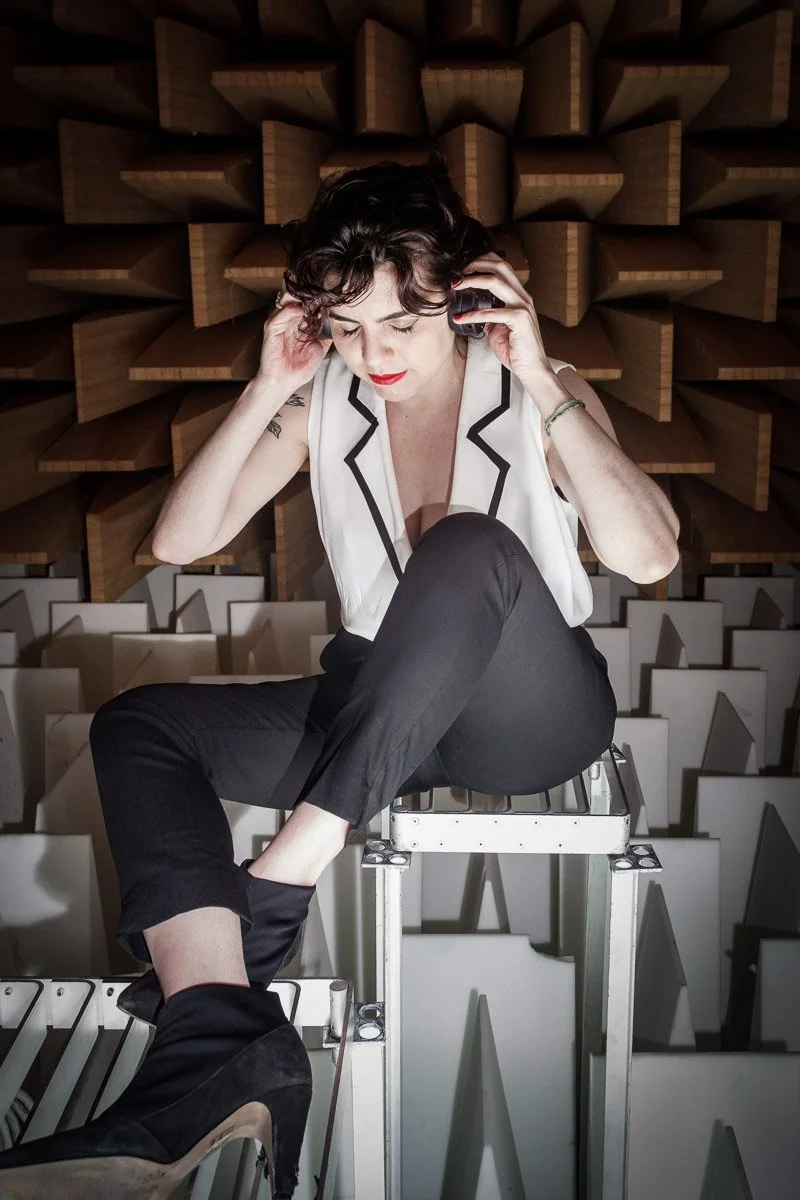
MICHELLE AGNÈS MAGALHÃES
Portland Sonata (world premiere)
It’s not every day that we get to listen to brand new works here at PPI! Thanks to Filippo’s “Sonata for Seven Cities” project (which, by now, you’ve heard a lot about, we hope!), we are the lucky recipients of a sonata composed not just for Filippo, but for all of us.
When I wrote to Filippo, back in August 2025, to gently prod about what to expect from Michelle’s composition, he was quick and obviously excited to respond: “It will be a Sonata, of around 15 to 20 minutes, written specifically for me, my playing, and this project. A piece thought to be versatile enough to be performed in the variety of settings that the residency will bring about. Her language is always very experimental, and she is planning to include a light preparation of the piano. It will not be ‘about’ Portland, as much as ‘for’ Portland.”
There you have it, PPI friends: A sonata created just for us! Although Michelle composes for a wide range of instruments (violin, cello, clarinet and harp, to name but a few), the piano is what she calls her “laboratory”: the place where she develops sounds and techniques. As the first instrument she learned to play herself, it is also integral to her vocabulary and understanding of what music is. With works such as “Mobiles” (2012) and “Soul of Snow”(2022), to name two of her most lauded works, Michelle challenges the very concept of melody and harmony, by meticulously manipulating the continuity and contrasts between harmonic and inharmonic sounds. Music, to her, can never be removed from physicality or spirituality. “Music, for me, is the art of dreamed embodied abstractions. Music is a laboratory forged between listening, motor experience, nature, and the symbolic.”
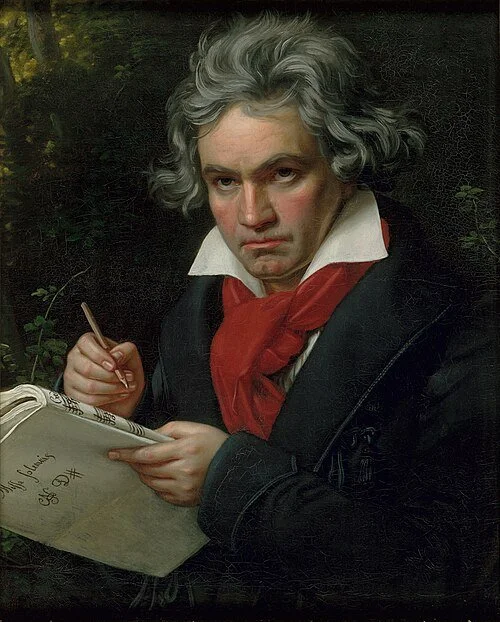
LUDWIG VAN BEETHOVEN
Sonata No. 31 in A-flat Major, op. 110
“The pieces abound in challenges that were unprecedented for their time and remain daunting. So much the better, Beethoven believed. He once told a publisher, ‘What is difficult is also beautiful and good.’ He wanted pianists to sweat.” Anthony Tommasini, NY Times music critic and musicologist, referring to Beethoven’s late sonatas.
Although there is clear evidence that by the time Beethoven composed his late sonatas, his greatness as a composer was unchallenged, it remains to be said that his works were nevertheless seen as unnervingly formidable. They pushed the boundaries of form, the physical limitations of the instrument and even the aesthetic standards of the day quite considerably. It’s exciting and extraordinary to think of two sonatas, almost exactly 200 years apart (Beethoven’s op. 110 composed between 1820 and 1822, Magalhães’s in 2025) and all the developments in-between. What has changed? What has stayed the same? Will audiences 200 years from now pair Beethoven with Magalhães and something by … a distant granddaughter of Taylor Swift’s?
As much as I personally want to believe in a better future, it’s hard not to listen to Beethoven and, like Brahms, like many composers to this day, feel like everything has been said in his late piano sonatas. In op. 110, particularly, he is grounded in the physical world, and yet, his spirit soars somewhere untouchable.
It is painfully difficult to summarize this sublime work. There is much to say about the history, the structure, the reception and even the recording of op. 110, but in today’s context we will run out of breath if we want to cover all that distance.
Listen to the very expressive, singing opening motif and marvel at the order and beauty Beethoven creates out of only six notes (in technical terms, the hexachord, or first six notes of the diatonic scale). These six notes form the thematic material of the entire sonata.
In the second movement, listen out for the rambunctious German folksongs that Beethoven alludes to (even though the music sounds serious and intense) – and stand in awe of a talent that can literally spin gold from straw, or make lemonade from life’s lemons.
In the third movement, keep in mind Beethoven’s veneration of Händel and try to think of an oratorio: It is in this movement where the parallel to dramatic choral work is most audible. In the second half of the movement, a three-voice fugue emerges – of which Beethoven himself remarked: “It is no great feat to write a fugue. I wrote dozens of them in my student years. But the imagination also asserts her claims, and today another, genuine poetic element must be blended with the antique form.”